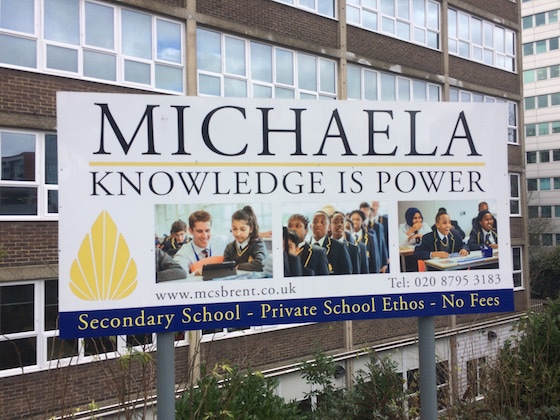
 I’m fascinated by the ‘Outstanding’ Michaela inspection. You can read it at http://mcsbrent.co.uk/wp-content/uploads/2017/06/Michaela-Community-School-OFSTED-report-final.pdf.
The school is in Brent, a disadvantaged area of North London and has a high proportion of students from ethnic backgrounds. The school isn’t yet full (I think it has just years 7,8 and 9 at the moment), and when it is will be a small secondary school (that's got to be a good thing in itself), with about 120 pupils in each year group. The fact that it’s not full means that no – or few - external examinations have been sat and hence there is no comparative data for GCSE results. My personal experience of Ofsted has been that if results are good, they focus less on the teaching, and that if teaching is outstanding, then results also have to be good to warrant an outstanding grade. So an ‘Outstanding’ result now may or may not augur well for the future, if an Ofsted ‘Outstanding’ is something to which a school or principal might aspire. So, apparently at Michaela there is less ‘marking’ by teachers and a lot of self-assessment. That might, or might not be a good thing, depending. And certainly from the school website it looks as if there is a good deal of responsibility put on parents to police, monitor and check homework. There may be some value in this, but it won't work for every child, and that may not be the child's fault. Discipline seems to be strict, with punishments for attending class without a pencil, for lateness and so on. Again, let's hope there are sensible exceptions made. There also appears to be a lot less active, constructivist learning and much more whole-class instruction. While a move away from a prescriptive 'you must do active learning' Ofsted approach is indubitably welcome, if the move is to whole-class direct instruction, I welcome it not. We should be developing critical thinkers, independent learners, not mini-encyclopaedias robotically reproducing what they've been taught. This combination of teaching activities and support for learning may of course produce 'results' in the short term. And the school does put an emphasis on pastoral work, on caring and so on – for example, they have ‘family’ school lunches where students serve each other and the staff, pass items ‘politely’ and clear up after themselves and each other. I wonder how important that really is? No doubt these are skills that it’s not a bad idea for children to have – what used to be known as ‘domestic’ skills for which I'd have got a Brownie hostess badge when I was a young girl. But in the scheme of life events, is that this important? Perhaps some form of critical pedagogy, teaching children about social justice, and its links to identity, and about concepts of equity and equality, would be of more value long term than learning which side the napkins should be placed when setting the table?
0 Comments
Leave a Reply. |

About me...
I was a psychology and social sciences teacher for many years and now I am in the throes of a leadership, teaching and research career in HE. I care passionately about education. This blog will show you why and how.
Categories
All
Archives
March 2023
|
 RSS Feed